Case study
Core banking at Peerless SGS
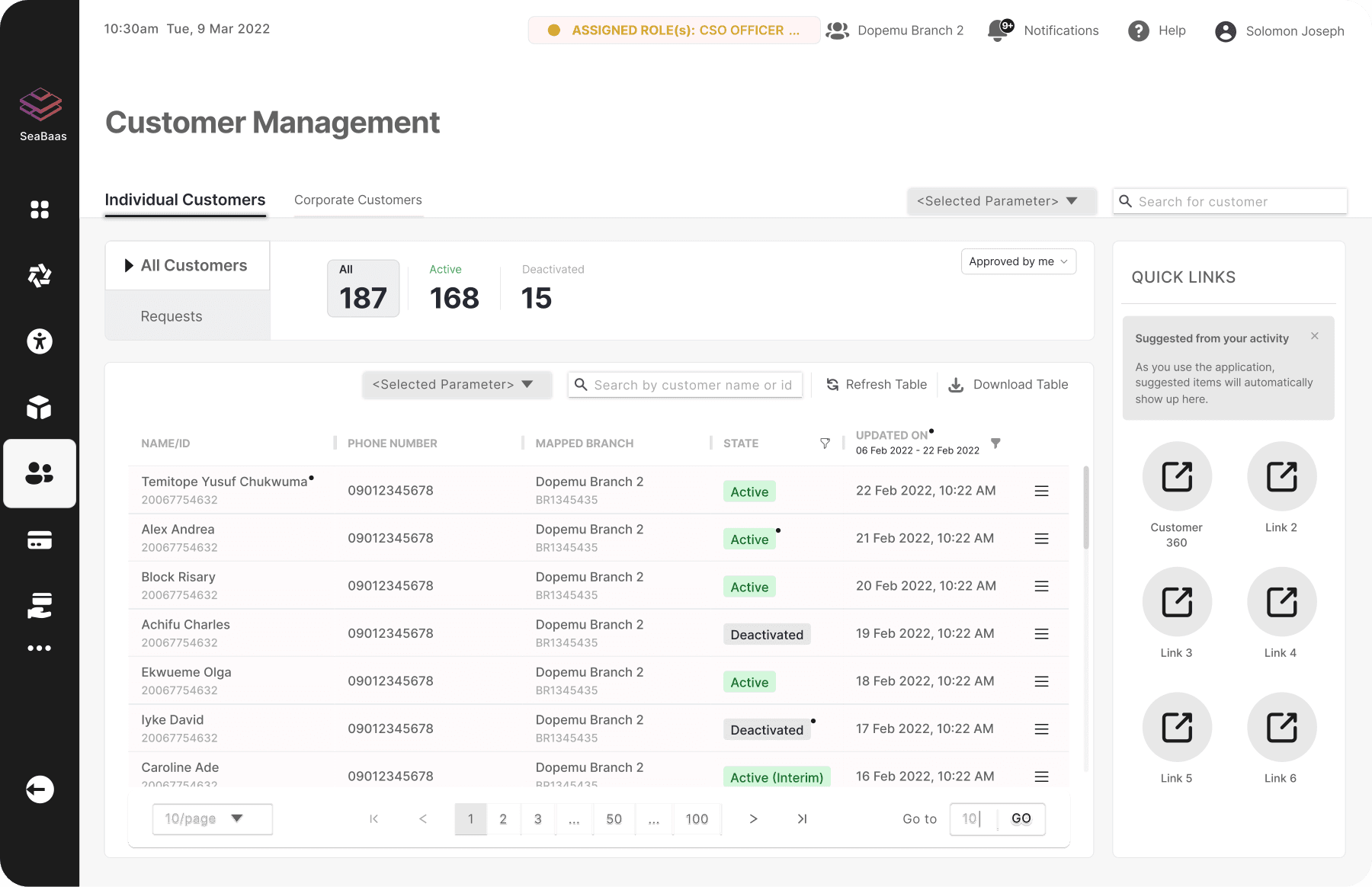
Frontend modules for SeaBaas and Mizan, the core banking platforms Peerless builds for banks and fintechs.
- Client
- Peerless SGS
- Period
- 2026 – present
- Focus
- Fintech · Core banking
- End users on Peerless platforms
- 5M+
- API calls a day
- 186M+
- Uptime
- 99.9%
- Core banking modules
- 15+
Platform figures published by Peerless on bepeerless.co. Users, API calls and uptime are from live production deployments over the last 12 months.
01The problem
SeaBaas is a cloud-ready core banking platform that runs real-time banking operations; Mizan is its configuration for interest-free (Islamic) banking. Each screen sits on top of a critical operation, so it has to be correct, consistent and safe to change, while many modules and teams keep adding to the same product.
02My role
Frontend Engineer. I build and maintain modules as microfrontends, contribute to the shared component library, and work with the backend engineers on the APIs each module depends on.
03Approach
- Each module is a React and TypeScript microfrontend inside one shared platform.
- Screens come from a shared component library, so tables, forms and approval flows look and behave the same in every module.
- Multi-step banking workflows broken into clear, responsive screens.
- API integrations for each critical operation, built alongside the backend engineers.
- Code reviews and architecture discussions as more modules and teams join the platform.
04Impact
- Modules in production at Sterling Bank, AltBank, ARM, Kolomoni, microfinance banks and fintechs.
- Faster delivery across teams, since new screens start from components that already exist.
05Stack
- React
- TypeScript
- Microfrontends
- Component libraries
- REST APIs
- Responsive design
- Performance optimisation
More screens
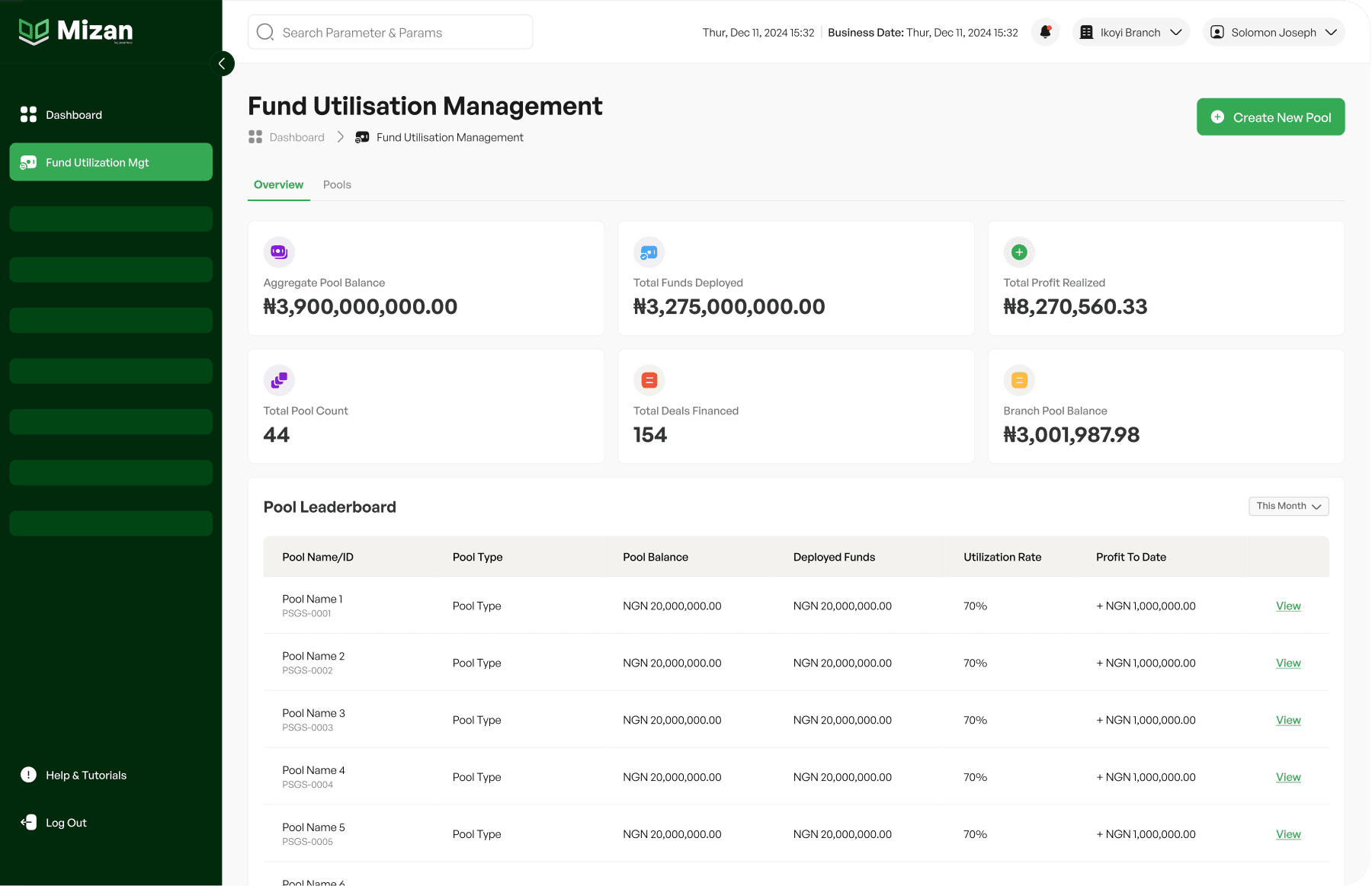
Mizan · Fund utilisation management · Image: Peerless